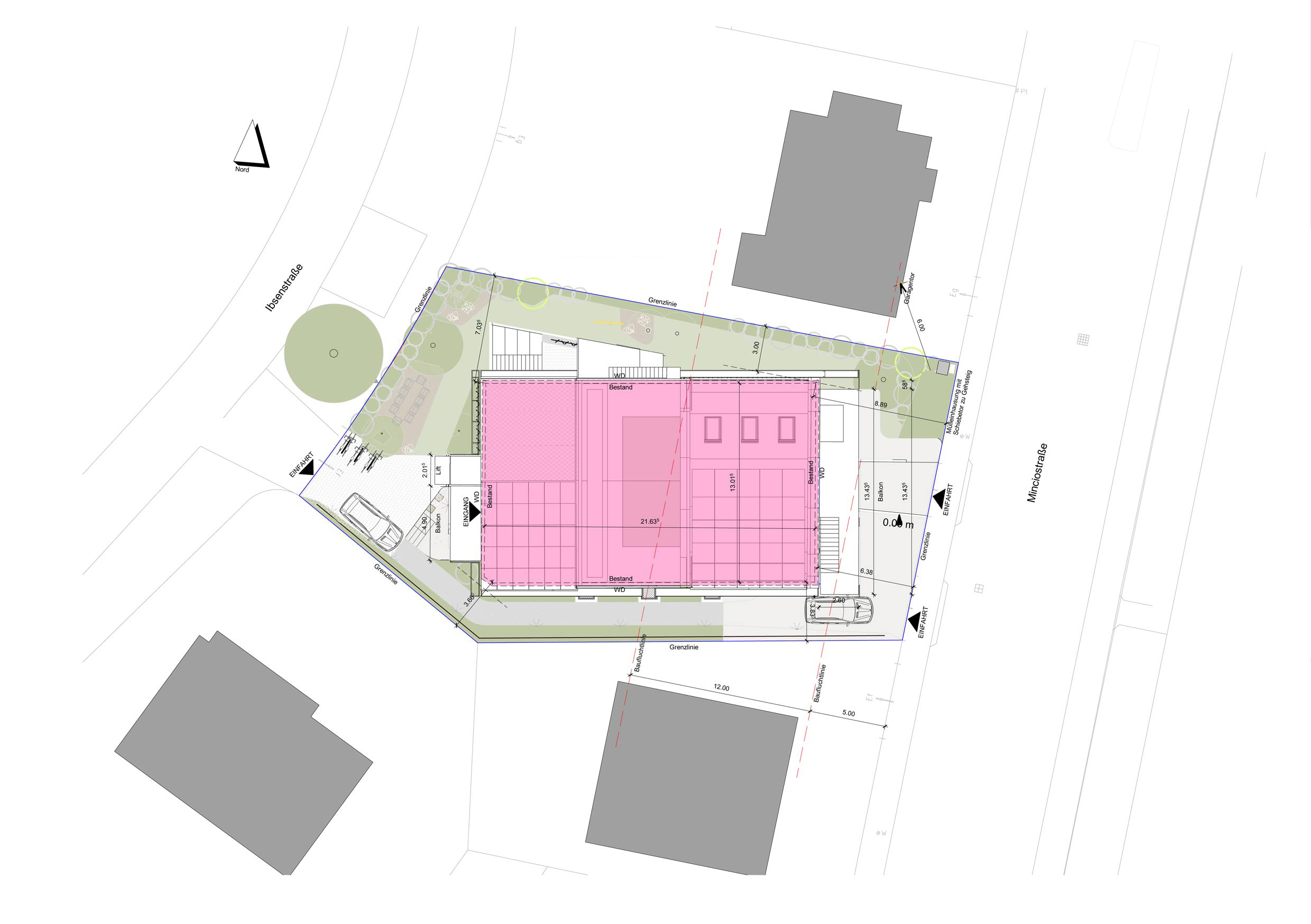
The project is located within the city limits (15th district of Vienna) and is surrounded by single-family homes to the south and north. To the east are interwar-era municipal housing complexes, and to the west is a green space and, further on, a retirement home. It has excellent public transport connections.
Architecture
The existing building was most recently used as a warehouse. An internal timber frame structure is self-supporting and enclosed by brick walls. The building has undergone several renovations, and its age could not be determined. The western section of the building is zoned for non-construction and can therefore only be preserved or demolished.
The entirely new use, which also places high demands on acoustics, could not be implemented within the existing internal timber frame structure (ceiling heights, fire protection, acoustics, structural integrity, etc.). Therefore, the internal timber frame structure will be completely removed, and new ceilings and walls will be installed.
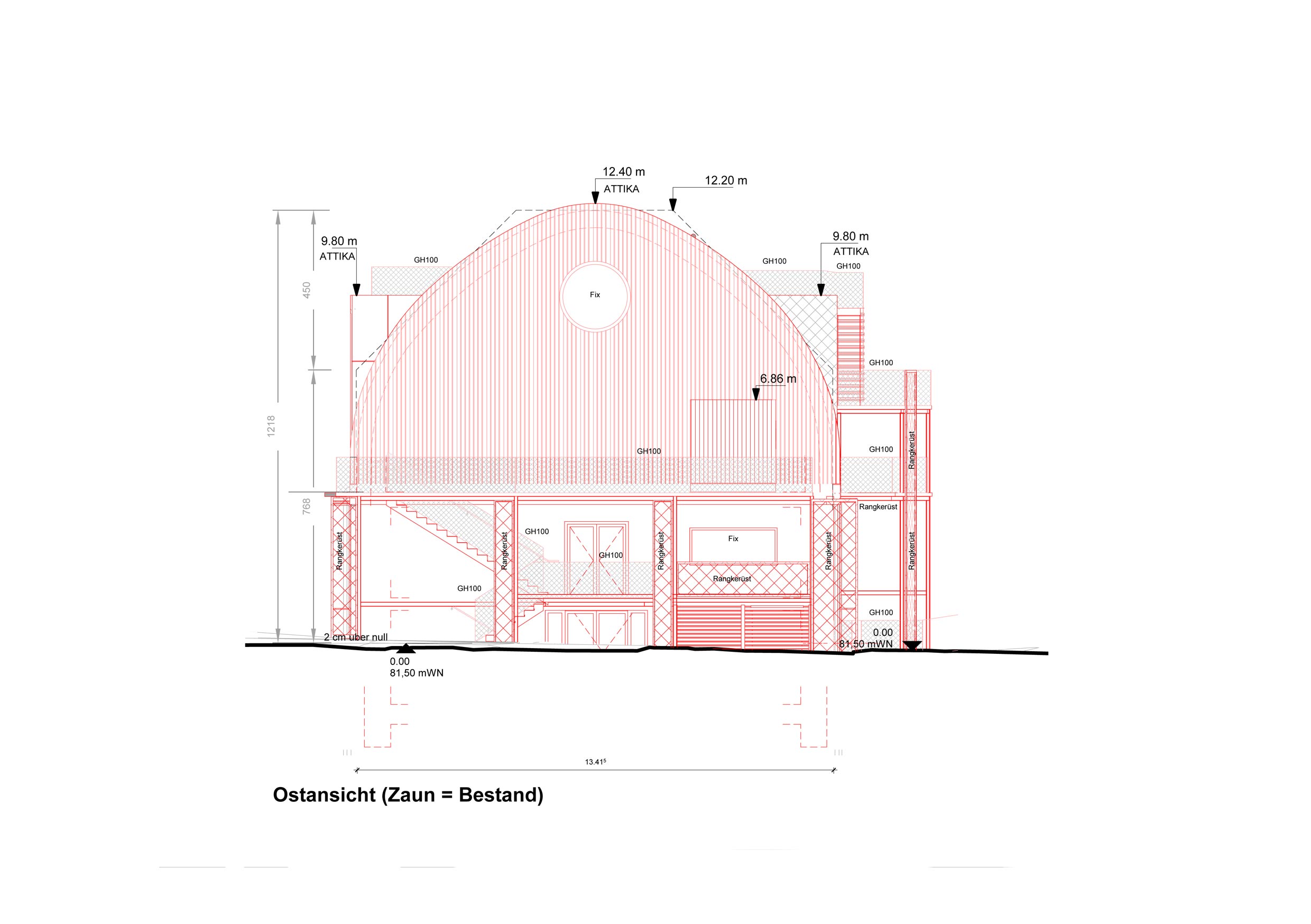
There are three floors: the lowest is approximately 1.5 meters below garden level. This floor contains a multi-purpose room with ancillary spaces. The middle floor comprises six multifunctional rooms (for teaching, practice, offices, and the like), a spacious common room, restrooms, and an entrance foyer on the west side. The top floor contains a performance space (approx. 150 m²) with a foyer and ancillary rooms. A staircase leads from the foyer to a gallery in the performance space. A new staircase is being installed in the northwest corner of the building. An elevator, attached to the building, is located to the north of the entrance area.
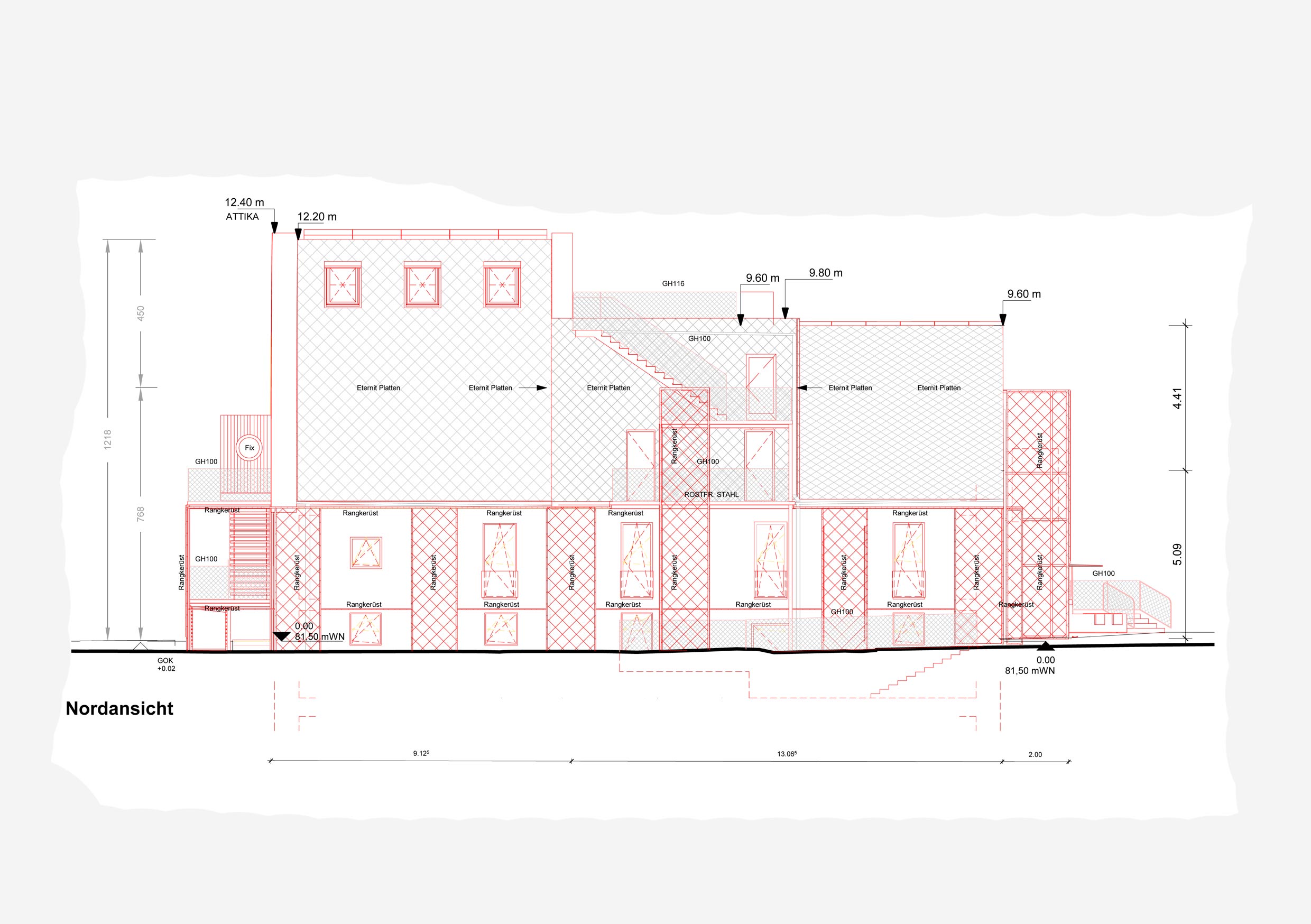
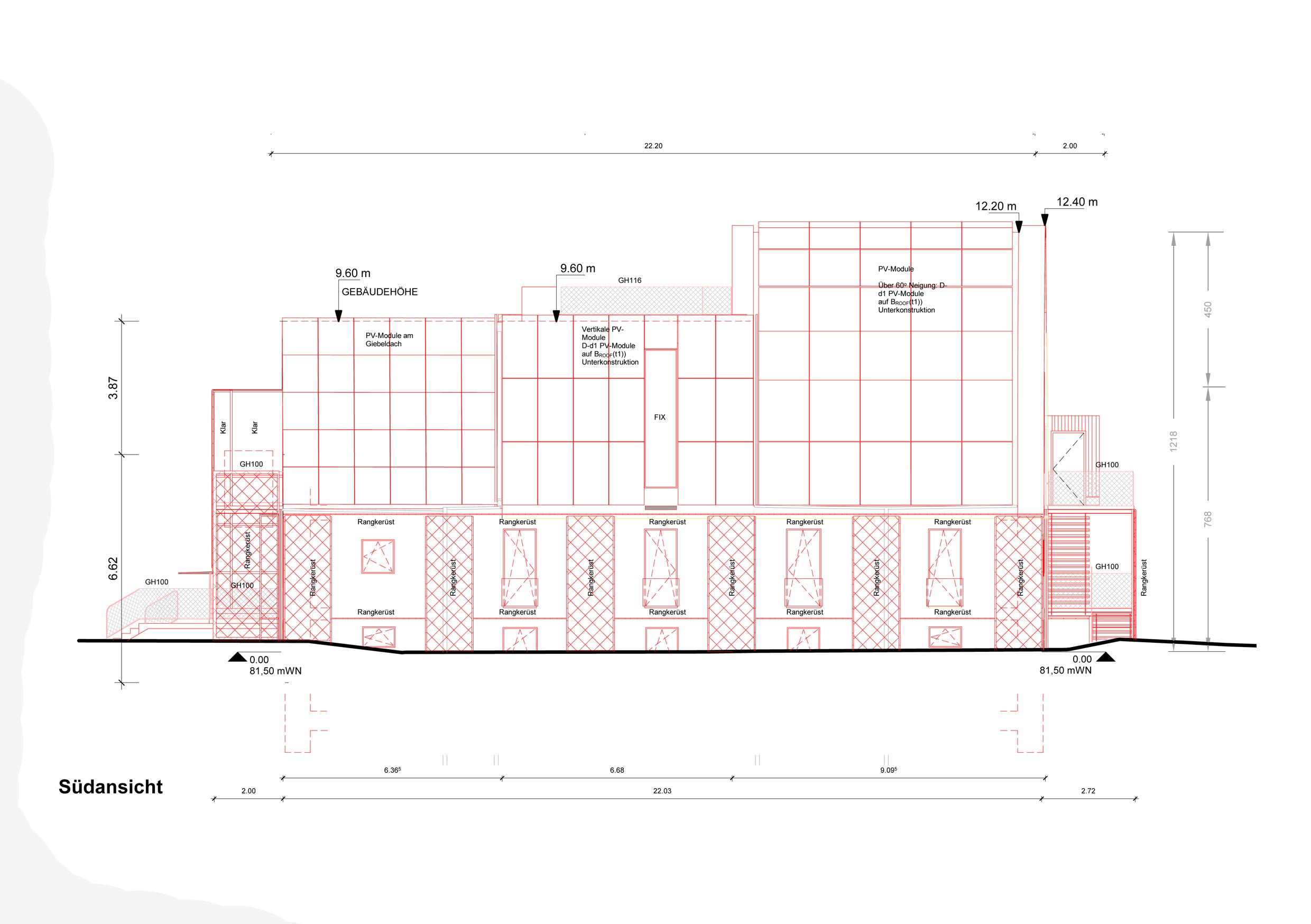
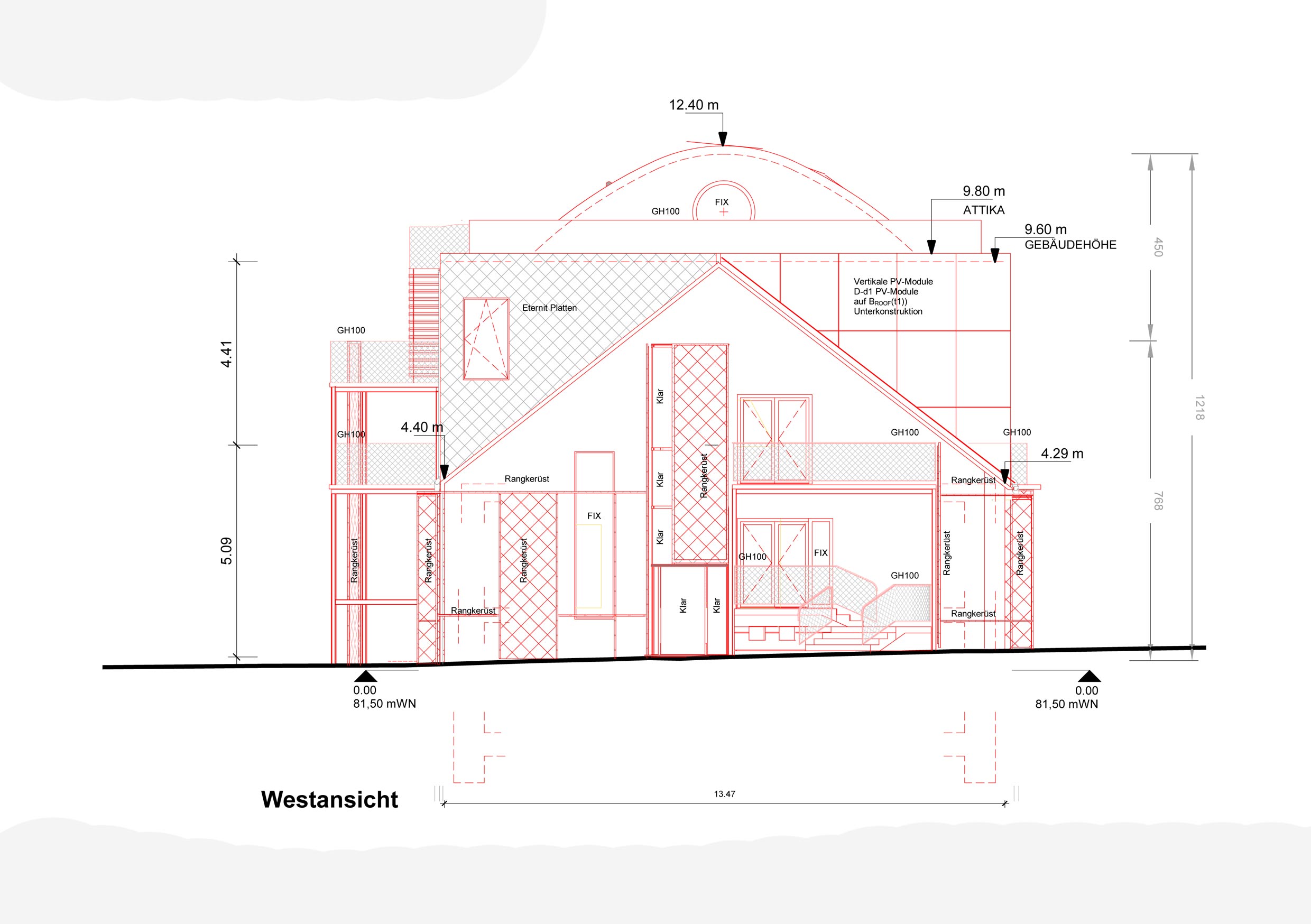
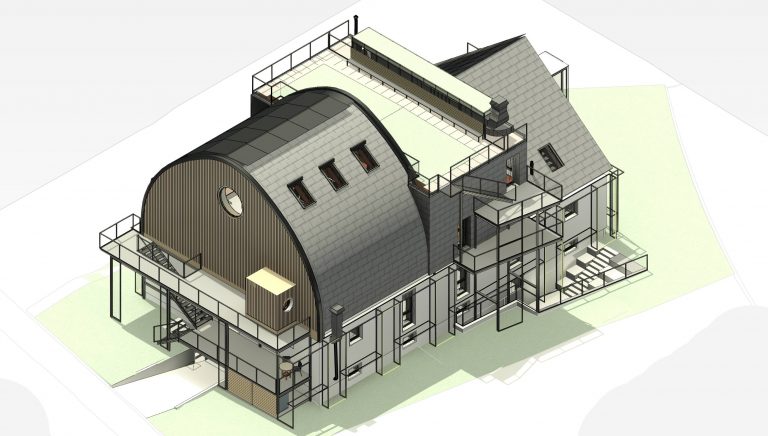
The building’s exterior is divided into four sections: the existing western structure, a central zone defined by dormer windows (to the south and north), and an eastern zone where the building will be extended to include the high-ceilinged performance space. To the east and west, structures are added to the building, incorporating balconies and, in the east, a staircase. These structures also serve as points of connection to the outside and can be landscaped with greenery. The southern and northern facades will also be landscaped with greenery. To the north are balconies and an excavation with access and a small forecourt leading to the multi-purpose room. The building’s main entrance is on the west side, accessible via a pedestrian and bicycle path. A forecourt and a half-level external staircase lead to the foyer of the middle floor. A second entrance is located on the east side. An existing ramp or a new staircase leads to the multi-purpose room on the ground floor, and an open staircase provides access to the two upper floors.
Energy Concept
The exterior walls are insulated to a high standard and, like the windows, airtightness, and new details, meet passive house requirements. A ventilation system with heat recovery enables the building to be constructed as a passive house. Due to its use, cooling plays a more important role than heating. The ground serves as the heat and cooling source, accessed via deep boreholes and a heat pump, providing energy for heating and hot water. A heat exchanger extracts cooling from the boreholes during the summer months. Heat and cooling are provided via thermally activated building components. The southern roof surfaces and southern facades on the top floor are covered with photovoltaic panels. Rainwater is infiltrated into the ground on the property.